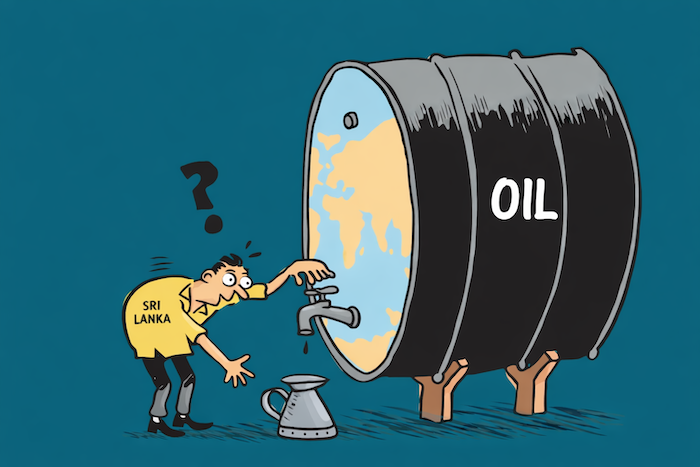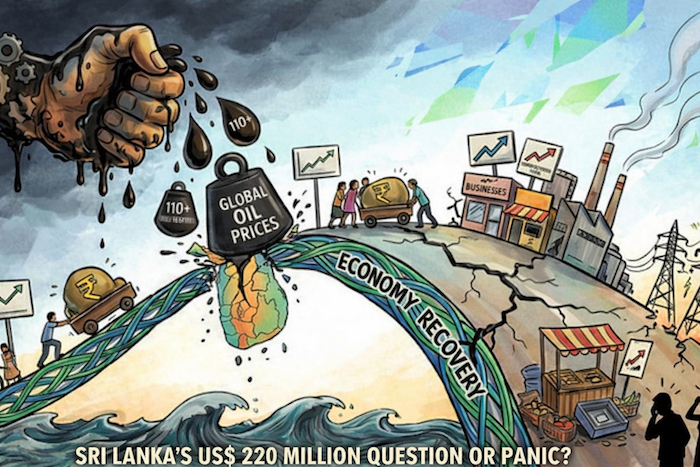

As the Middle East crisis deepens and oil markets react with increasing volatility, Sri Lanka once again faces a familiar but uncomfortable reality: the island’s energy security is tied to events unfolding thousands of miles away. With reports now emerging that two scheduled crude cargoes may already have been cancelled, the situation demands not merely routine administration but decisive crisis management.
At the centre of this moment stands President Anura Kumara Dissanayake.
Be that as it may, this is not simply a matter of political leadership. It is a matter of logistics, supply chains and economic resilience. Sri Lanka imports virtually all of its petroleum needs. From diesel that powers transport and electricity generation to jet fuel that sustains the tourism industry, the country’s economic activity depends on a steady flow of energy supplies.
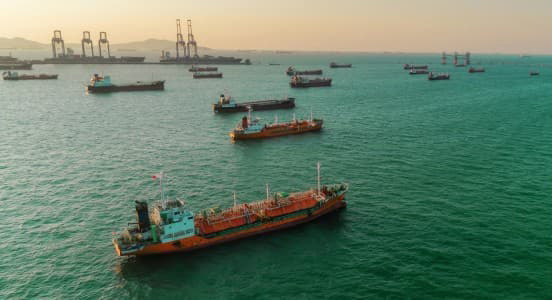
The geopolitical risk is clear. Tensions around the Strait of Hormuz have already introduced a significant risk premium into global oil markets. Should shipping disruptions occur in that narrow corridor, the consequences would ripple rapidly through energy supply chains worldwide.
For Sri Lanka the first priority must therefore be securing alternative supply arrangements immediately. Waiting for normal crude cargoes to arrive may prove risky in an unstable market. Instead, emergency procurement of refined fuels from regional suppliers such as India or Singapore may provide faster relief.
The second priority is storage and distribution readiness. Facilities in Kolonnawa, Muthurajawela and the strategic tank farms of Trincomalee must be assessed for maximum operational readiness. Even partial activation of additional storage capacity could extend the country’s buffer against supply interruptions.
A third and equally important measure involves demand management. Without creating unnecessary alarm, authorities must prepare contingency plans to prioritise fuel allocation for critical sectors including public transport, power generation, healthcare and export logistics.
Above all, the government must ensure that international suppliers remain confident in Sri Lanka’s ability to finance energy imports. In global commodity markets, credibility can be as important as cash.
Sri Lanka has faced fuel crises before and emerged from them through a combination of pragmatism and resilience. Yet the lesson of past disruptions is clear: hesitation can quickly transform vulnerability into crisis.
In moments such as these, leadership requires moving swiftly before the fuel gauge begins to fall.
In this context President AKD will need to demonstrate exceptional leadership, dispense with established processes and make immediate spot purchases of crude if he has to – currently spot prices are being held merely for 2 hours – not quite enough time to appoint parliamentary committees. If ever there was a need for strong, fearless leadership it is now.