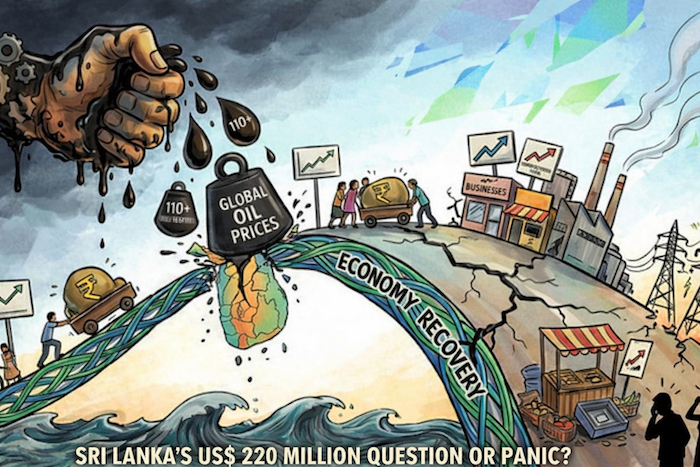


Daily FC – Sri Lanka’s strategic location in the Indian Ocean positioned along one of the world’s busiest east-west maritime corridors has once again thrust the island nation into the centre of a sensitive geopolitical situation, following the sinking of an Iranian naval vessel off its coast amid escalating tensions in the Middle East.
Security analysts warn that the incident could have far-reaching diplomatic and economic implications for Colombo, which is still navigating a fragile recovery from the devastating economic crisis of 2022.
Retired Navy Admiral Priyantha Perera, who has been advising Sri Lankan authorities on the unfolding situation, described the country as a “geopolitical linchpin” because of its location astride critical global shipping routes linking Asia, the Middle East and Europe.
“Sri Lanka’s strategic geography places us at the centre of major maritime movements,” Perera said. “As a neutral coastal state we cannot deny refuge when such an incident occurs in our waters. Once a vessel or its crew seek protection, it becomes our responsibility to ensure they remain here until the conflict situation is resolved.”
He noted that under international maritime norms, Sri Lanka must prevent any vessel or crew involved in such incidents from leaving until the legal and diplomatic processes surrounding the conflict are settled.
“That responsibility falls squarely on us now,” he said, adding that the “unwanted consequences” of the confrontation between major powers could increasingly be felt in Colombo.
Diplomatic balancing act
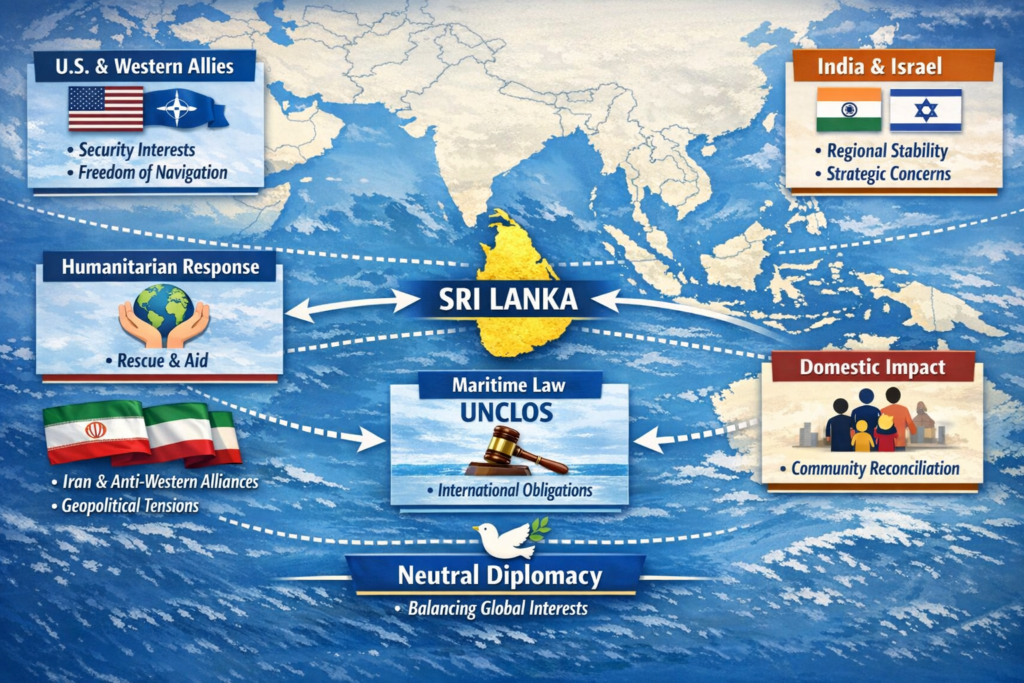
The situation presents Sri Lanka with a delicate diplomatic challenge. Both the United States and Iran are important economic partners for the island, and officials are keenly aware that missteps could have consequences for trade and international relations.
The United States remains Sri Lanka’s largest single export market, particularly for the country’s vital apparel sector. Last year alone, Sri Lanka exported more than $1.9 billion worth of garments to the US, accounting for roughly 38% of the country’s apparel exports by value.
At the same time, Iran continues to play an important role in Sri Lanka’s tea trade. Despite sanctions that curtailed energy imports from Tehran several years ago, the two countries developed an innovative tea-for-oil barter arrangement to settle outstanding financial obligations.
Under this arrangement, Sri Lanka exports tea to Iran instead of paying cash for earlier oil purchases a mechanism that avoided sanctions because it did not generate hard currency flows to Tehran. The scheme was designed to help Sri Lanka repay approximately $250 million owed to Iran for past crude oil imports.
According to the Sri Lanka Tea Exporters’ Association, most of this debt has now been settled through tea shipments under the barter agreement.
Officials in Colombo are therefore wary of any developments that might strain relations with either Washington or Tehran.
Economic risks from regional conflict
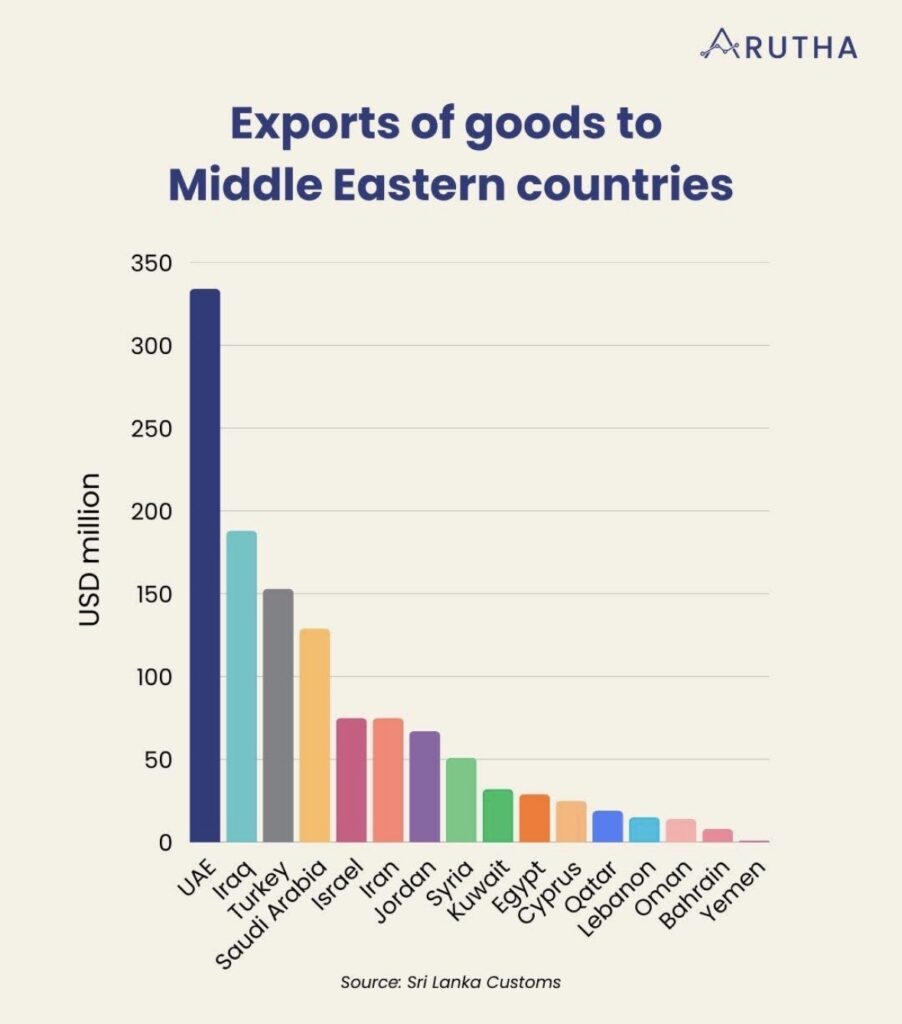
Exports of Sri Lankan goods to the Middle East Region amounted to $1,215 million in 2025 approximately 11% of the country’s total revenue from goods exports.
The United Arab Emirates is Sri Lanka’s largest Middle Eastern goods export market, worth $334 million in 2025. 57% of exports to the Middle East are tea, coffee and spices.
Global shipping rates will rise due to the on-going conflict. The closure of the Strait of Hormuz affects supply and demand into the region. This will affect Sri Lanka’s export competitiveness and revenues.
Beyond the diplomatic sensitivities, economists warn that the widening Middle East conflict could have serious economic consequences for Sri Lanka.
One immediate concern is the potential increase in marine risk insurance premiums for ships transiting the region. Higher insurance costs could significantly raise freight charges for goods moving through the Indian Ocean and Persian Gulf routes heavily used by Sri Lankan exporters and importers.
Tourism could also be affected if regional instability discourages travel to the Indian Ocean. The industry has only recently begun recovering after the pandemic and the domestic economic crisis.
However, perhaps the most immediate risk lies in the tea trade.
The Middle East remains the largest market for Sri Lanka’s world-famous “Ceylon Tea”, accounting for nearly half of total exports. Much of this tea is shipped through the Strait of Hormuz, a critical maritime passage that has become increasingly volatile amid military tensions.
Industry analysts warn that if shipments to the region are disrupted, Sri Lanka’s tea exporters could lose up to $15 million per week.
Such a shock would reverberate across the rural economy, as the tea industry directly and indirectly supports hundreds of thousands of workers across the island’s plantation sector.
A reminder of Sri Lanka’s vulnerability
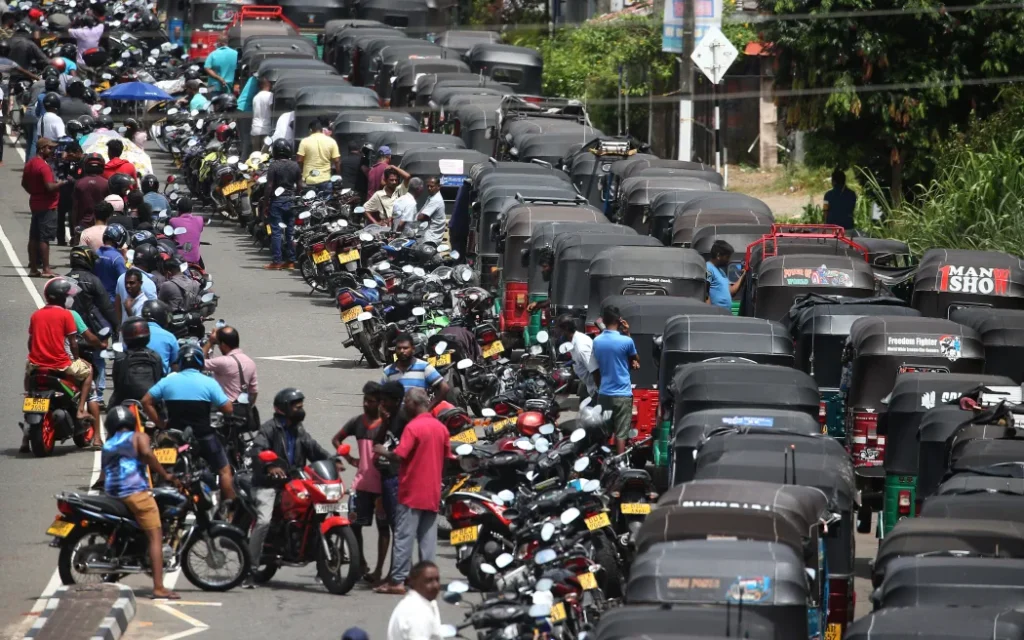
The unfolding situation highlights how vulnerable Sri Lanka remains to geopolitical shocks beyond its control.
The country is only beginning to stabilise after the 2022 economic collapse, which triggered severe shortages of fuel, food and foreign exchange and forced the Government to seek assistance from the International Monetary Fund.
While macroeconomic indicators have improved since then, Sri Lanka’s recovery remains fragile, heavily dependent on export earnings, tourism revenue and stable global trade routes.
Security experts note that Sri Lanka’s geographic advantage long seen as a strategic asset can also expose the island to the spill-over effects of conflicts between larger powers.
“As a country located at the crossroads of global maritime trade, Sri Lanka inevitably becomes entangled in wider geopolitical developments,” Admiral Perera observed.
“The challenge for Colombo is to maintain strict neutrality while protecting its economic interests and ensuring that regional tensions do not undermine the country’s hard-won recovery.”