
Colombo, March 2026 – Sri Lanka’s fragile economic comeback is facing a brutal reality check.
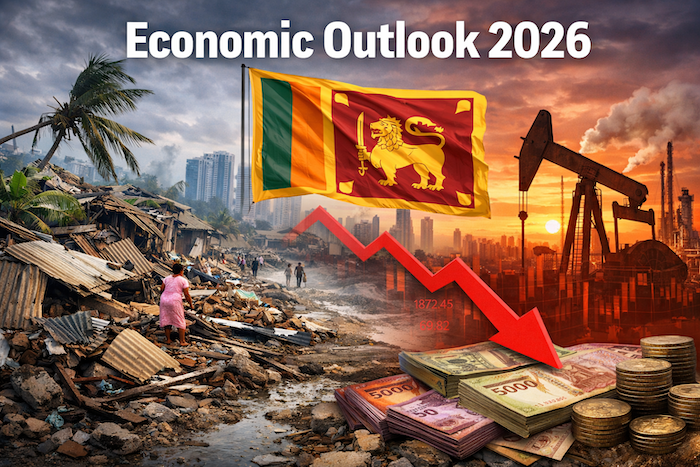
Just as the island began clawing its way out of its worst financial crisis in decades, a devastating one-two punch Cyclone Ditwah at home and a surging global oil shock from the US–Iran conflict abroad is threatening to derail the recovery.
The numbers are stark.
Cyclone Ditwah has left billions of dollars in damage, wiping out infrastructure, crippling agriculture, and displacing economic activity across key regions. What was expected to be a strong rebound year is now shaping into a slowdown, with growth projections sharply downgraded.
At the same time, rising oil prices are hammering Sri Lanka’s weak external position.
This is a country that imports nearly all its fuel and now pays the price.
- Import costs are climbing fast
- Foreign reserves are under renewed pressure
- Inflation risks are back on the table
- Investor confidence is turning cautious
And here’s the real problem: Sri Lanka’s reserves were never truly “rebuilt” they were propped up by IMF inflows and short-term funding, not strong, sustainable dollar earnings.
Now, that cushion is looking dangerously thin.
There are still bright spots. Tourism is rebounding. Remittances are still flowing despite Middle East crisis. But they may not be enough to offset the scale of the external shock.
The government now faces a high-stakes balancing act funding reconstruction, keeping IMF reforms on track, and avoiding another spiral into instability.
Sri Lanka isn’t in crisis yet.
But the warning signs are flashing.
This economic report was prepared by a group of economists who have chosen to remain anonymous. If you have any queries please forward it to editor@srilankachronicle.com