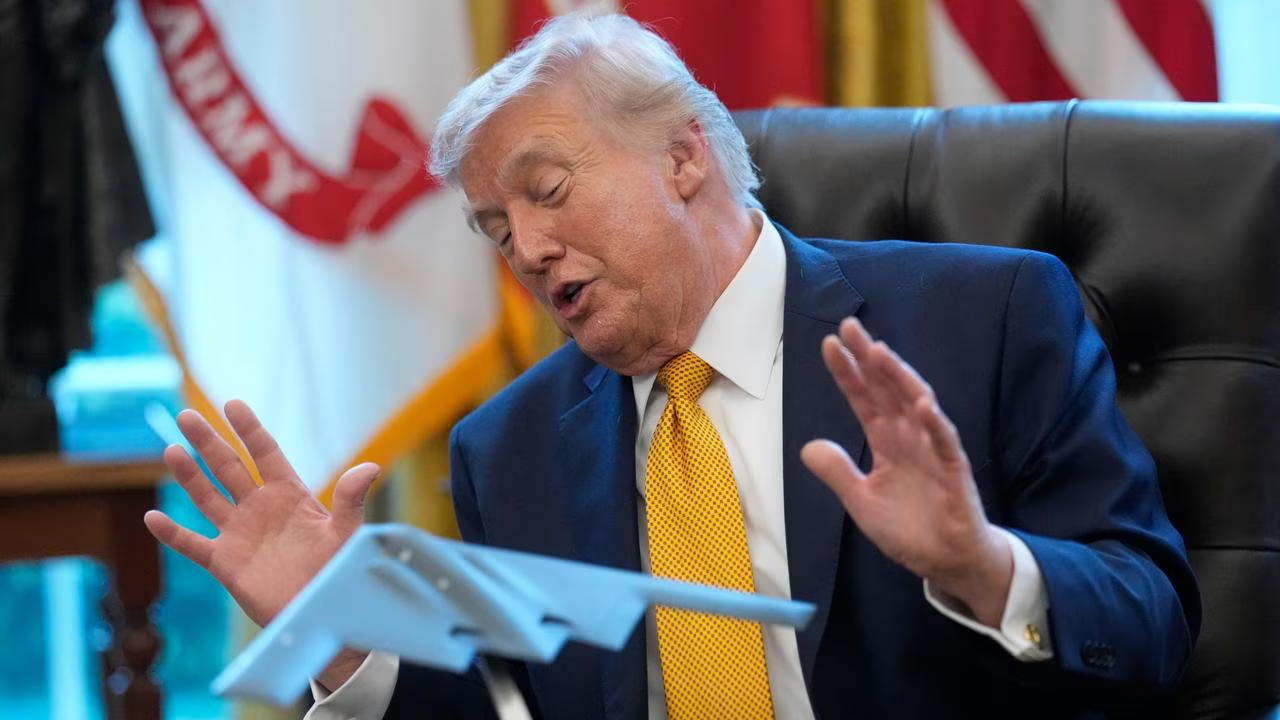
In a dramatic shift that has caught markets, militaries, and diplomats off guard, US President Donald Trump now says Washington and Tehran have held “very good and productive conversations” aimed at a “complete and total resolution” of hostilities in the Middle East.
And just like that – the bombs are, for now, on hold.
After weeks of escalation, threats to obliterate Iranian energy infrastructure, and a near chokehold on the Strait of Hormuz, the United States has stepped back from the brink.
Planned strikes have been paused for five days – a window not of peace, but of possibility.
Markets reacted instantly. Oil prices tumbled. Stocks rebounded. The world, it seems, exhaled – cautiously.
But let’s not get carried away.
This is not a ceasefire. This is not a deal. This is a pause – conditional, fragile, and loaded with strategic calculation. Even as talks are described as “constructive,” there is no confirmation of concessions, no reopening yet of Hormuz, and no indication that the deeper fault lines – nuclear ambitions, regional proxies, and sanctions – have been resolved.
Be that as it may, the significance is undeniable.
For the first time since this conflict spiralled into open confrontation, both sides are talking – not posturing, not threatening, but engaging. And in geopolitics, that alone can shift the trajectory
Yet history offers a caution.
US–Iran relations have seen “productive talks” before – often followed by breakdowns, mistrust, and renewed escalation. The distance between dialogue and durable peace remains vast.
So – is this the end? No. This is the moment where war pauses… and diplomacy is tested.
What happens next will decide whether this is remembered as the beginning of peace – or merely the calm before another storm.