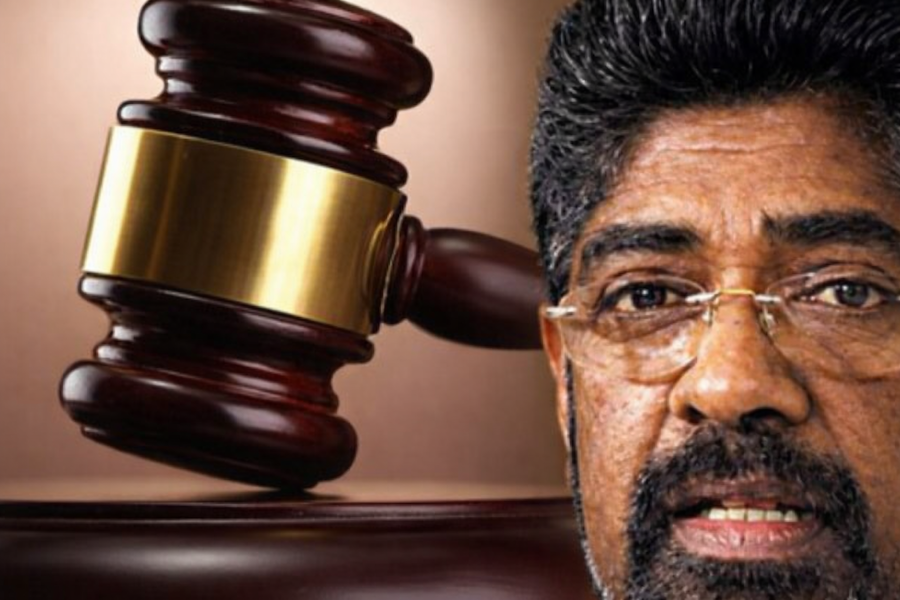
There was a time when Keheliya Rambukwella understood power better than most.
He knew how to speak for it, defend it, and, when necessary, shield it. In the theatre of Sri Lankan politics, that made him valuable. In time, it made him powerful.
From media spokesman to cabinet mainstay, his rise was not built on silence – but on presence. He was visible, vocal, and unwavering in loyalty. That combination, in this country, is often rewarded.
And it was. But power, once acquired, demands something more difficult than loyalty.
It demands balance. Because governance is not messaging.
It is not the art of explaining decisions after they are made. It is the discipline of ensuring that decisions themselves carry fairness, proportion, and consequence for all stakeholders – not just the system that sustains power.
This is where Rambukwella’s story turns.
As Health Minister, the shift was immediate and unforgiving. The role was no longer about defending policy – it was about delivering outcomes.
And the outcomes did not hold.
Pharmaceutical shortages, procurement controversies, and a growing unease within the public health system began to surface. These were not abstract failures. They were felt – in wards, in clinics, in homes.
And with each passing episode, the perception hardened.
That the system was no longer operating with balance. Balance between:
cost and care
efficiency and safety authority and accountability
When that balance breaks in a sector like health, the consequences are not political first – they are human.
And the public knows it.
Rambukwella did what he had always done – he spoke, he defended, he countered.
But this time, the country was not listening for defence. It was looking for equilibrium.
And it did not see it.
Then came the institutional reckoning.
The Supreme Court, in a landmark ruling, held Rambukwella and other senior officials personally responsible for violating the fundamental rights of citizens in relation to the medicines procurement process. He was ordered to pay Rs. 75 million, with other respondents also directed to pay substantial sums.
It was a rare moment in Sri Lanka’s public life. Not because wrongdoing was alleged.
But because accountability was made personal. This is the uncomfortable truth.
His fall was not triggered by a single scandal, nor by a single decision. It was the cumulative effect of a deeper failure:
The inability to maintain balance in a system that demanded it most.
Because in the end, Sri Lanka does not judge its leaders only by what they say.
It judges them by whether the system under their watch feels fair.
THE STING
Keheliya Rambukwella did not lose power because he lacked voice.
He lost it because, when it mattered most, the balance the people needed was no longer there.
And when that balance broke, the system – finally – answered back.
WHAT THE SUPREME COURT ACTUALLY FOUND
In its ruling on the medicines procurement case, the Supreme Court made several key determinations:
VIOLATION OF FUNDAMENTAL RIGHTS
The Court held that the actions of the respondents – including former Health Minister Keheliya Rambukwella – amounted to a violation of Article 12(1) of the Constitution:
Equality before the law
The procurement process was found to be arbitrary and unlawful, failing to meet required legal and regulatory standards.
PROCUREMENT OUTSIDE SAFEGUARDS
The Court found that:
• Medicines were procured from a supplier not registered with the National Medicines Regulatory Authority (NMRA)
• Established procedures and safeguards were bypassed
• Due process expected in public procurement was not followed
PERSONAL LIABILITY IMPOSED
In a significant departure from past practice, the Court ordered personal compensation:
Keheliya Rambukwella: Rs. 75 million
Other senior officials:
substantial personal payments (including Rs. 50 million each in some cases)
This reinforced the principle that:
Public office does not shield individual responsibility
NO BLANKET DEFENCE OF AUTHORITY
The Court rejected the argument that decisions taken under official capacity were automatically protected. Instead, it emphasised:
Accountability applies even at the highest levels of government
POSSIBLE FURTHER ACTION
The Court directed that:
The Commission to Investigate Allegations of Bribery or Corruption (CIABOC)examine whether criminal liability arises
WHAT IT MEANS
Administrative decisions can trigger constitutional liability
Public officials may face personal financial consequences Procurement failures are not merely procedural – they can become rights violations
The ruling transforms accountability from institutional to personal – marking a significant shift in how power is judged under law.