
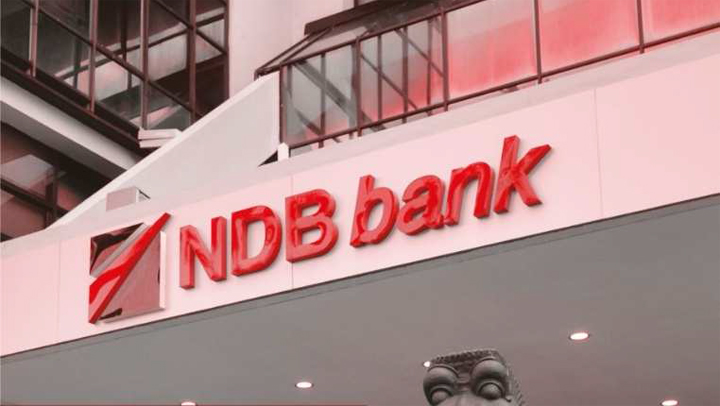
FINANCIAL CHRONICLE – Fitch Ratings has lowered the National Long-Term Rating of Sri Lanka’s National Development Bank (NDB) from ‘A(lka)’ to ‘A-(lka)’ and assigned a negative outlook, following a significant fraud incident valued at LKR 13.2 billion that has raised concerns regarding the bank’s credit profile.
In addition to the downgrade of the long-term rating, Fitch has also adjusted the rating for NDB’s Basel III-compliant subordinated debentures, lowering it from ‘BBB+(lka)’ to ‘BBB(lka)’.
The global ratings agency indicated that the negative outlook is indicative of the uncertainties surrounding the ongoing investigation into the fraud and its potential repercussions on the bank’s operations, including possible alterations to its business and risk profile. Fitch anticipates a recovery in profitability over the medium term; however, the fraud is expected to impede the bank’s ability to meet its projected profitability targets.
Furthermore, Fitch has indicated that NDB’s National Rating may face further downgrades if there is a deterioration in capital buffers or if liquidity issues arise.
In a statement released on April 10, 2026, Fitch Ratings noted that the downgrade reflects NDB’s diminished credit profile compared to other banks with similar ratings following the announcement of the fraud incident. This event has placed pressure on the bank’s capital and profitability relative to its peers, as well as highlighted deficiencies in its internal risk controls.
On April 2, 2026, NDB disclosed that the fraud involved several employees and potentially external parties, with the estimated loss amounting to approximately LKR 13.2 billion, which is roughly 1.3% of the bank’s total assets as of the end of March 2026.
Fitch estimates that the gross losses stemming from the fraud will account for around 2.3% of NDB’s risk-weighted assets by the end of 2025. This situation is projected to lower the bank’s core profitability measure of operating profit to below 2% in 2025, falling short of similar institutions. While profitability recovery is expected in the medium term, the fraud incident is likely to hinder the bank’s achievement of its profitability goals.
As a result of the fraud, NDB’s retained earnings, after tax considerations, are likely to reduce the common equity Tier 1 ratio by approximately 1.1 percentage points, from the reported 12.9% as of the end of 2025. Although this ratio remains above regulatory requirements, it leaves the bank with limited capital buffers compared to peers, potentially affecting its financial flexibility and loss absorption capacity. The Central Bank of Sri Lanka’s suspension of cash dividends is expected to continue until the bank strengthens its capital position.
In terms of funding and liquidity, NDB’s loan-to-deposit ratio was recorded at 91% at the end of 2025, which is consistent with industry standards, while its liquidity coverage ratio was 209%. However, if the loan-to-deposit ratio continues to increase significantly, primarily due to challenges in attracting deposits, the bank’s liquidity could be adversely affected compared to other banks.
Rating sensitivities indicate that NDB’s National Rating is vulnerable to shifts in its credit strength relative to other Sri Lankan entities. A downgrade may occur if the bank’s capital buffers weaken further or if liquidity pressures develop. Additionally, negative actions could result from regulatory penalties or corrective measures that significantly impact the bank’s earnings, market position, or financial flexibility, particularly if the operational weaknesses exposed by the fraud are not addressed efficiently.
Conversely, Fitch could revise the outlook to stable if NDB successfully restores and maintains capital buffers that align more closely with those of its peers, thus supporting its risk profile. A stable outlook might also be achieved through effective remediation of the control deficiencies highlighted by the incident, which would mitigate risks to the bank’s reputation and business operations.
With respect to other debt and issuer ratings, NDB’s Basel III-compliant subordinated debt is rated two notches lower than the bank’s National Rating, reflecting Fitch’s expectations of limited recoveries in the event of non-performance. There are no additional adjustments for non-performance risks, as the subordinated notes do not feature going-concern loss-absorption capabilities.
The ratings for this debt will track the movements of the bank’s national rating. The primary sources of information utilized in this analysis are outlined in the applicable criteria.
(Colombo/Apr 10/2026)