
Sri Lanka has long been a signatory to the right instruments.
It has signed and ratified the United Nations Convention against Organized Crime and the Palermo Protocol, committing itself — on paper — to preventing, suppressing, and prosecuting human trafficking, particularly of women and children.
On paper, Sri Lanka is aligned with global norms. In practice, enforcement has been uneven.
To coordinate the many agencies nominally responsible for combating trafficking, the National Task Force on Trafficking in Persons was established in 2010. Its mandate was straightforward: bring together institutions involved in prevention, protection, investigation, and prosecution — and impose some coherence on a problem that thrives precisely where coordination fails.
That task force has operated through time-bound national action plans. The most recent strategic framework — covering 2021 to 2025 — formally expired on 31 December 2025.
What it achieved, and what it failed to, has now been reviewed.
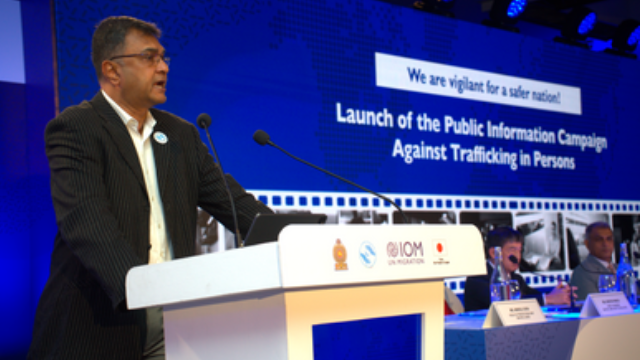
Following that review, a new National Strategic Action Plan for 2026–2030 has been drafted, reportedly with the consensus of all relevant stakeholders. The plan is structured around four familiar pillars: prevention, protection, prosecution, and partnership — a formulation that will be instantly recognisable to anyone who has followed Sri Lanka’s approach to transnational crime.
The difference, as always, will not be in the architecture.
It will be in execution.
The Cabinet of Ministers has now approved the implementation of this new action plan, based on a proposal presented by the President in his capacity as Minister of Defence.
That approval matters politically. It signals continuity of commitment at the highest level of government. But it also places responsibility squarely where it belongs.
Sri Lanka does not suffer from a lack of conventions, task forces, or strategic documents. It suffers from selective enforcement, weak prosecutions, institutional silos, and a chronic reluctance to confront trafficking networks when they intersect with labour migration, recruitment agencies, or politically sensitive interests. The next five years will therefore test not Sri Lanka’s ability to draft plans — but its willingness to act on them.
Because trafficking is not defeated by ratification ceremonies or Cabinet papers. It is defeated when victims are protected without delay, perpetrators are prosecuted without exception, and institutions cooperate without waiting for the next action plan to expire.
That is the standard Sri Lanka has now set for itself — again.
Whether it finally meets it will depend on whether this strategy becomes law in motion, rather than policy at rest.