
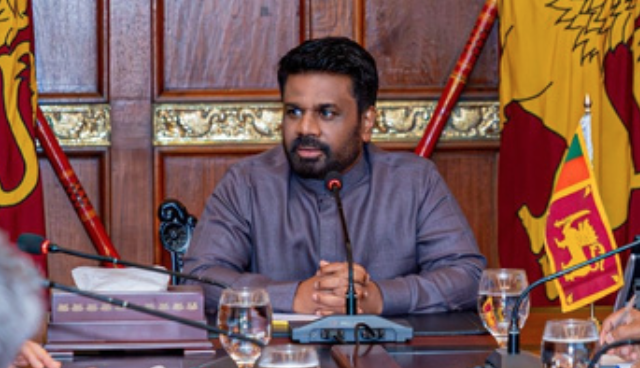
Six months into its tenure, the administration of President Anura Kumara Dissanayake finds itself navigating a familiar Sri Lankan paradox: rising macro- level optimism alongside persistent grassroots scepticism.
On paper, approval ratings remain strong. Public polling indicates confidence in economic direction has improved. Yet beyond survey figures, conversations with small business owners, public servants, professionals, youth activists and daily wage earners reveal a more textured picture — one defined less by enthusiasm than by cautious expectation.
Anti-Corruption: Applause for Intent, Demand for Action
Few campaign promises resonated as powerfully as the pledge to dismantle entrenched corruption. On the ground, there is broad acknowledgment that the tone has changed. “There is less visible excess,” one Colombo- based professional remarked. “But we are waiting to see the big cases move.”
That sentiment repeats across districts. The public appears supportive of the anti-corruption drive in principle, but increasingly attentive to outcomes rather than rhetoric. High-profile investigations, asset recovery, and institutional reform remain the benchmarks by which credibility will ultimately be judged.
Among younger voters, there is impatience. “We didn’t vote for symbolism,” said a university graduate in Kandy. “We voted for accountability.” The message is clear: anti- corruption cannot remain a moral posture; it must translate into visible enforcement and systemic change.
The Fight Against Illegal Drugs: Visible Effort, Lingering Doubt
If there is one area where the government has earned immediate recognition, it is in enforcement against narcotics and organised crime. Across urban and semi- urban communities, residents acknowledge increased police visibility and more frequent publicised raids.
Small business owners in Colombo and Gampaha describe a “sense of order returning” in certain neighbourhoods. Parents, particularly in suburban areas, express guarded relief at what they perceive as tougher policing.
Yet scepticism persists beneath the surface. Critics question whether the crackdown targets supply networks at scale or merely street-level actors. “Arrests are happening,” noted a civil society volunteer in Kurunegala, “but the real test is whether the networks are dismantled.”
There is also quiet concern about balance. Some legal observers caution that strong enforcement must remain within procedural guardrails to maintain public trust. On the ground, however, immediate security often outweighs abstract legal debate.
Economic Recovery: Hope, Not Comfort
Perhaps the most complex sentiment surrounds the economy. There is widespread acknowledgment that inflationary pressures have eased compared to peak crisis years. Essentials are more predictable. Power cuts are less disruptive. The atmosphere is calmer.
But calm is not prosperity.
Daily wage earners and small traders describe a reality where income has stabilised but not expanded. “It’s better than two years ago,” said a vegetable vendor in Matara. “But better is not good.”
The prevailing mood is not triumph but relief. Citizens appear willing to give the administration time — provided incremental improvement continues.
A Government Under Observation
Across demographics, one phrase recurs: “Let’s see.”
The public mood is neither oppositional nor euphoric. It is observational. Voters appear to be granting political space — but not blank cheques.
There is recognition that structural reform takes time. There is also awareness that Sri Lanka has heard promises before.
In rural communities, the emphasis remains practical: jobs, prices, stability. In urban centres, governance standards and institutional reform feature more prominently in conversation. Among youth, systemic transformation remains the expectation.
The Message from the Ground
If there is a unified message emerging, it is this: performance now matters more than narrative.
The government’s anti-corruption pledge must produce measurable accountability. The anti-drug campaign must demonstrate structural impact, not episodic spectacle. Economic recovery must transition from stabilisation to opportunity.
Sri Lanka’s electorate is politically seasoned. It has endured crisis and recalibration. Today, it appears willing to extend patience — but only alongside proof.
For now, the verdict from the ground is neither endorsement nor rejection. It is conditional trust.
And conditional trust, in Sri Lankan politics, is both an opportunity — and a warning.