
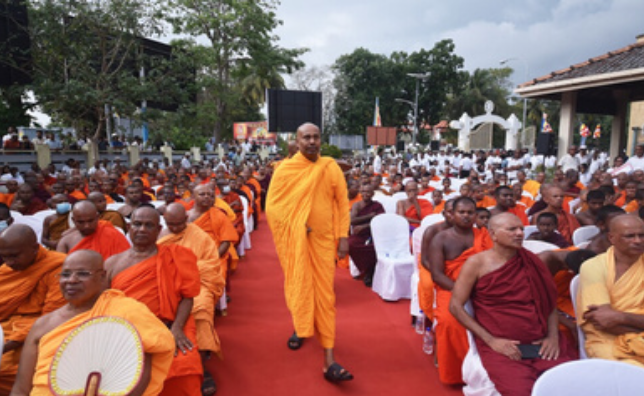
In Colombo last Friday, hundreds of Buddhist monks took to the streets — not with violence, not with slogans of upheaval, but with a calm, resolute appeal: they want a greater voice in the affairs of the Sri Lankan state. The turnout may have seemed peaceful, but the message was emphatic. This was not a tender of complaints. It was an appeal for influence.
Sri Lanka’s constitution names Buddhism the state religion and commits the government to protect and foster it. More than 70% of the population is Buddhist, and the clergy has historically exerted substantial moral and cultural sway. Yet in recent years, some monks have come to feel that their role — once foundational — has been relegated to the margins. They argue that the government has disrespected not only religious sentiment but a tradition of consultation on matters of state — and that cannot be ignored.
The monks’ appeal, read aloud in Colombo, directly called on President Anura Kumara Dissanayake to re- centre Buddhist principles in national value systems. In their draft note, they went further, urging that top government posts be restricted to Buddhists and that Buddhist education be incorporated more deeply into school curriculums. They also pressed for stronger protection of archaeological sites tied to Buddhism — symbolic anchor points of the nation’s identity.
This rally did not erupt into unrest. There were no clashes. No confrontations with police.
But that is exactly the point: influence doesn’t always announce itself with bluster. It seeks legitimacy in silence — and today’s monks understand the optics of restraint. In a country still navigating post-civil war identity, economic fragility and political realignment, religion remains a potent force. When a respected clergy speaks, the state listens — even if quietly.
In recent weeks, some leaders within the Buddhist order have lamented what they describe as “organised campaigns” against Buddhism itself — framing criticism of clergy actions as part of a broader social media push to undermine the religion’s place in public life. Whether those campaigns are spontaneous or orchestrated, they reflect a larger unease: many in the clergy feel cultural ground has shifted beneath them, and they are not prepared to concede influence without a stand.
For the government, this balance is delicate. Sri Lanka is guaranteed freedom of religion. Minority faiths — Hindus, Muslims, Christians — enjoy constitutional protection. But when the majority faith asserts its expectations in state affairs, the question becomes not only about constitutional mandates, but about the nation’s political identity going forward. The monks are telling the country that Buddhism is not a relic of the past, nor should it be sidelined in the present.
What remains to be seen is whether Colombo’s leadership will respond with policy, rhetoric — or renewed dialogue.