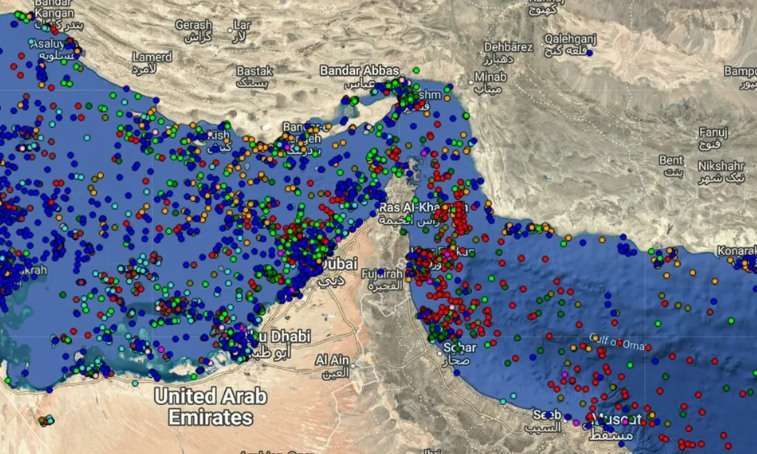
The Strait of Hormuz remains the most critical pressure point in the current Middle East crisis, and over the past 12 hours the situation has not eased. Shipping continues under restriction, not freedom. Vessels are moving, but cautiously, selectively, and under conditions shaped largely by Iranian signalling rather than international consensus.
This is not a full closure. But it is not normal passage either. That distinction is important. Iran appears to be exercising what can best be described as calibrated control – tightening access just enough to remind the world of its leverage, while stopping short of a move that would trigger an immediate and overwhelming military response.
Be that as it may, the economic consequences are already visible. Oil markets are reacting not just to actual disruption, but to the possibility of escalation. Insurance premiums for shipping have risen. Routes are being reconsidered. Operators are hedging risk in real time.
The Strait, in effect, has become a bargaining tool. It is no longer just a maritime corridor. It is a geopolitical instrument. And in that role, it carries influence far beyond its narrow physical dimensions.For now, the balance holds. Traffic flows, albeit unevenly. But the margin for miscalculation is narrowing. One misstep, one incident, one escalation – and the situation could shift from managed tension to open disruption.