FINANCIAL CHRONICLE – Sri Lanka has recorded a surplus in the current account of the budget for the first time in 38 years in 2025, according to central bank data. This achievement is attributed to a surge in tax revenues and effective management of current spending.
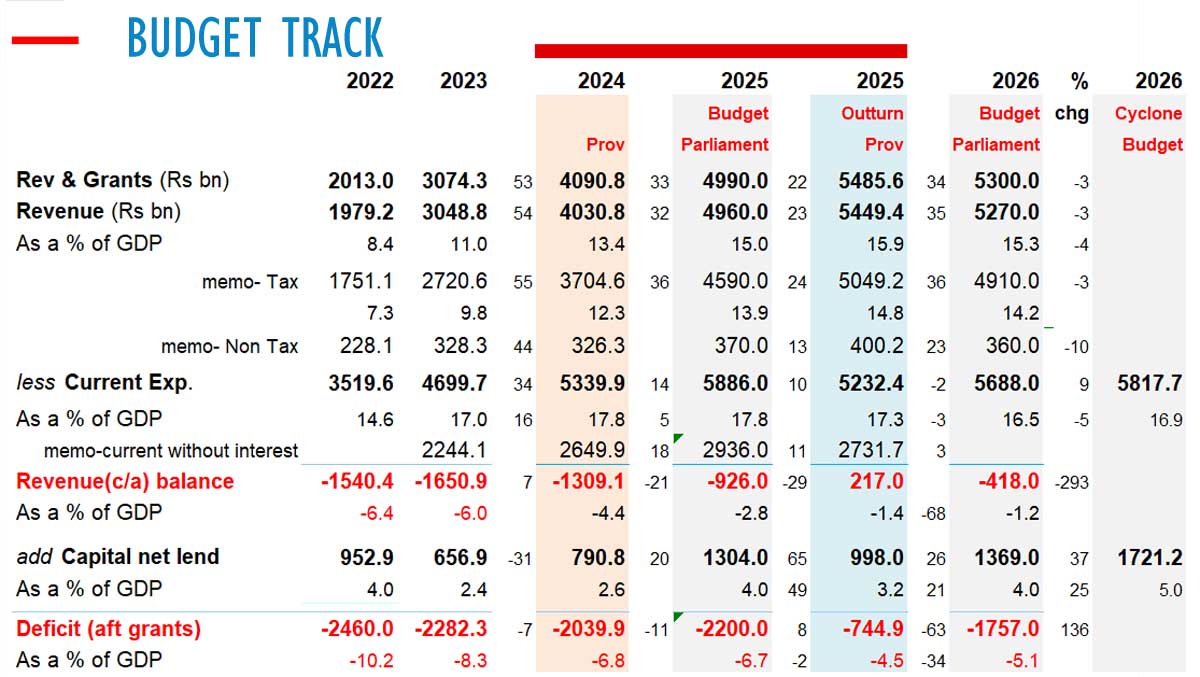
The central bank emphasized the importance of maintaining low spending to control inflation, despite some depreciation of the currency, particularly in the latter part of the year. Tax revenues increased by 36 percent, reaching 5,049 billion rupees in 2025, partially due to the resumption of taxes on car imports, which had been halted the previous year due to foreign exchange shortages stemming from inflationary rate cuts in 2020.
The strategy of blocking highly taxed imports, especially vehicles, often disrupts fiscal metrics and diminishes government tax revenues. In 2025, current spending decreased by 2 percent to 5,232 billion rupees. Consequently, Sri Lanka reported a current account surplus in the budget of 217 billion rupees, marking the first such surplus since 1987.
In 2025, interest costs for Sri Lanka were reported at 2,500 billion rupees, down from 2,690 billion in 2024 and below the budgeted 2,950 billion rupees, which contributed to the reduction in current spending. Analysts suggest that a stronger monetary standard can lead to lower interest rates, as seen in historical contexts involving gold versus silver standards.
Sri Lanka experienced a surge in nominal interest rates and inflation starting in the early 1980s, following the IMF’s Second Amendment to its articles, which led to significant currency depreciation and a lack of accountability for rampant monetary debasement. This monetary depreciation and subsequent inflation made budget management increasingly difficult.
Historically, before the era of currency depreciation and high inflation promoted by macroeconomists, countries could effectively run current account surpluses and overall budget surpluses by simply cutting spending. However, rising current expenditures tied to inflation, including wage bills and interest costs, have complicated this process.
Most nations lost the ability to maintain budget surpluses following the collapse of the gold standard. For instance, the United States was able to achieve budget surpluses in the late 1990s for the first time since the Bretton Woods collapse during a period of so-called ‘deflation’.
In 2025, capital expenditure in Sri Lanka amounted to 998 billion rupees, an increase from 790 billion rupees in 2024. The overall budget deficit decreased to 744.9 billion rupees in 2025, down from 2,039 billion a year earlier. This budget surplus allowed for part of the capital spending to be financed through taxes for the first time since 1987.
Historically, Sri Lanka has engaged in non-current spending to appease macroeconomists through stimulus measures, often neglecting long-term returns and project evaluations. However, the new administration has stated its commitment to prioritizing projects that deliver returns beyond one year.
In 2025, the central government’s domestic debt rose to 18,675 billion rupees, up from 11,319 billion rupees. Foreign debt also increased to 11,319 billion rupees from 10,429 billion rupees. The central government debt-to-GDP ratio improved to 91.6 percent in 2025, down from 96.1 percent, although additional state-owned enterprise debts remain a concern.
With aggressive monetary depreciation anticipated in 2026, these gains could easily be reversed. The rupee reached 315 against the US dollar by March, and foreign debt continues to inflate with monetary depreciation, negatively impacting disposable incomes and capping living standards and tax revenues.
Critics argue that monetary authorities have evaded accountability for their flawed operating frameworks and inflationist policies, claiming that exchange rates are determined by market forces despite clear evidence of a managed exchange rate policy. In clean floating exchange rate regimes, exchange rates are primarily influenced by monetary policy.
Furthermore, the monetary depreciation resulting from flawed IMF-driven policies has been legitimized through doctrines that allow officials to avoid responsibility for the consequences of currency debasement and ensuing social unrest. Politicians, however, face repercussions from the electorate as rising living costs catalyze social discontent.
In recent years, the central bank has devalued the rupee from 4.76 to 315 to the US dollar, undermining the economic credibility of elected governments. The year 2018 exemplified the detrimental effects of policies such as buy-sell swaps and rate cuts that led to currency depreciation, even as energy prices rose and the state-owned Ceylon Petroleum Corporation sustained losses from dollar borrowings.
In 2026, the central bank continued to depreciate the rupee through practices like printing money via buy-sell swaps and extensive dollar purchases, disregarding calls from President Anura Kumara Dissanayake to uphold the value of the currency. Such depreciation exacerbates foreign debt levels, while simultaneously keeping nominal interest rates elevated.
Countries in East Asia and the Gulf Cooperation Council, including Qatar and the UAE, have rejected inflationist doctrines and maintained monetary stability, contrasting sharply with the experiences of Sri Lanka and India, where inflationist central banks have exacerbated external shocks through currency devaluation.
In Sri Lanka, the Treasury has been deprived of dollars due to the central bank’s privileges and monopolies, forcing it to borrow dollars to cover interest payments and loans rather than pursuing dollar purchases or imposing dollar taxes. There have been renewed calls to strip the central bank of its privileges, especially as the responsibility for repaying the IMF loan shifts to the Treasury, alongside demands for stringent regulations to prevent monetary authorities from instigating crises and forex shortages.
(Colombo/Mar23/2026)