
The question is no longer whispered – it is being asked aloud. Read all about it! Will They or Will They Not. Mahinda R.
Sri Lanka finds itself at a deeply sensitive moment, where law, politics and public sentiment intersect in a way that cannot easily be separated.
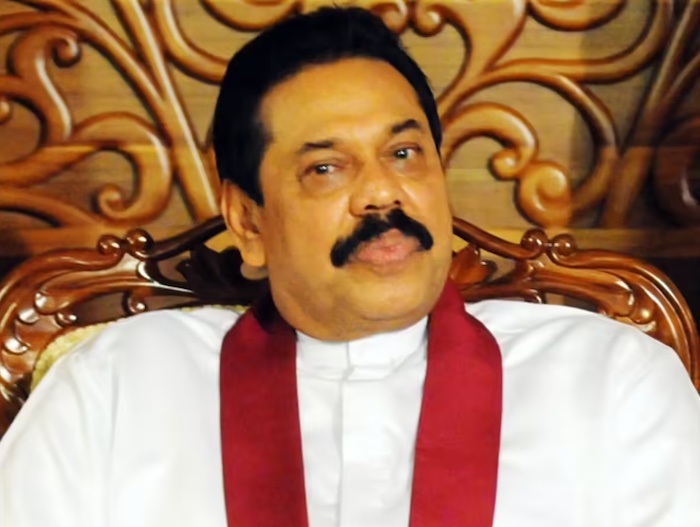
The re-emergence of the Airbus affair has once again brought into focus not just the details of a transaction, but the larger question of accountability at the highest levels of power. At the centre of this unfolding debate lies a question that is both simple and profound: will this government have the resolve to formally name former President Mahinda Rajapaksa as a suspect, if the evidence so warrants?
Be that as it may, this is not a question that can be viewed in purely legal terms. It carries with it a political and emotional weight that few other issues can match.
Mahinda Rajapaksa remains a towering figure in Sri Lanka’s modern history. While his current political influence may not be what it once was, his legacy, particularly in bringing an end to the war in 2009, continues to resonate with a significant section of the population. For many, that achievement is not merely historical; it is personal, tied to a sense of security and national unity that followed years of conflict.
It is precisely this enduring sentiment that makes the present situation so delicate. Any move to formally implicate or proceed against such a figure will not be seen in isolation. It will be interpreted through the lens of loyalty, legacy and, inevitably, political motive. That does not make the question of accountability any less important. If anything, it makes it more so. However, it does mean that the consequences of action, or indeed inaction, must be carefully considered.
President Anura Kumara Dissanayake came to office on a clear and unequivocal promise to address corruption and restore faith in public institutions. That promise was not framed with exceptions. It was not presented as conditional. The expectation, therefore, is that any credible allegation, regardless of the individuals involved, will be subject to due process and impartial investigation. The credibility of the administration now rests on whether it can uphold that principle in practice.
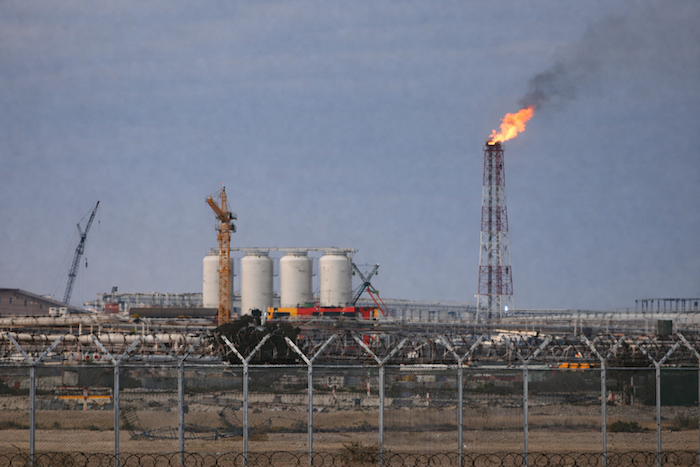
At the same time, the broader national context cannot be ignored. Sri Lanka is once again experiencing the strains of an energy crisis. The reappearance of fuel queues, with motorists limited to approximately fifteen litres per week, has reintroduced a level of daily inconvenience that the public had hoped was behind them. There is, for now, a degree of understanding that these pressures are driven in part by external factors, particularly instability in the Middle East. However, public patience, while notable, is not limitless.
In such an environment, any development perceived as politically charged has the potential to trigger wider reactions. The possibility that action against a figure of Rajapaksa’s stature could lead to protests or public unrest is not something that can be dismissed lightly. Sri Lanka’s recent history has demonstrated how quickly sentiment can translate into mobilisation, particularly when economic pressures are already being felt.
Yet, the alternative path carries its own risks. If the state hesitates to act where evidence exists, it reinforces a long- standing perception that accountability in Sri Lanka is selective.
It suggests that certain individuals, by virtue of their past achievements or enduring popularity, remain effectively beyond the reach of the law. Such a perception would be deeply damaging to efforts aimed at rebuilding trust in institutions and governance.
The challenge, therefore, is not simply whether to act, but how to act. Any process must be firmly grounded in evidence and conducted with transparency and independence.
It must be seen to be free of political influence and driven solely by the requirements of justice. Clear and measured communication will also be essential, ensuring that the public understands both the basis for any action and the legal framework within which it is being taken.
Ultimately, this moment represents more than a single investigation. It is a test of whether Sri Lanka is prepared to move beyond a history where difficult questions were often deferred. It is an opportunity to demonstrate that accountability is not contingent on convenience or circumstance, but is a fundamental principle of governance.
Be that as it may, the country now watches closely. The decisions taken in the days ahead will not only shape the outcome of this particular matter, but will also signal the direction in which Sri Lanka intends to move.